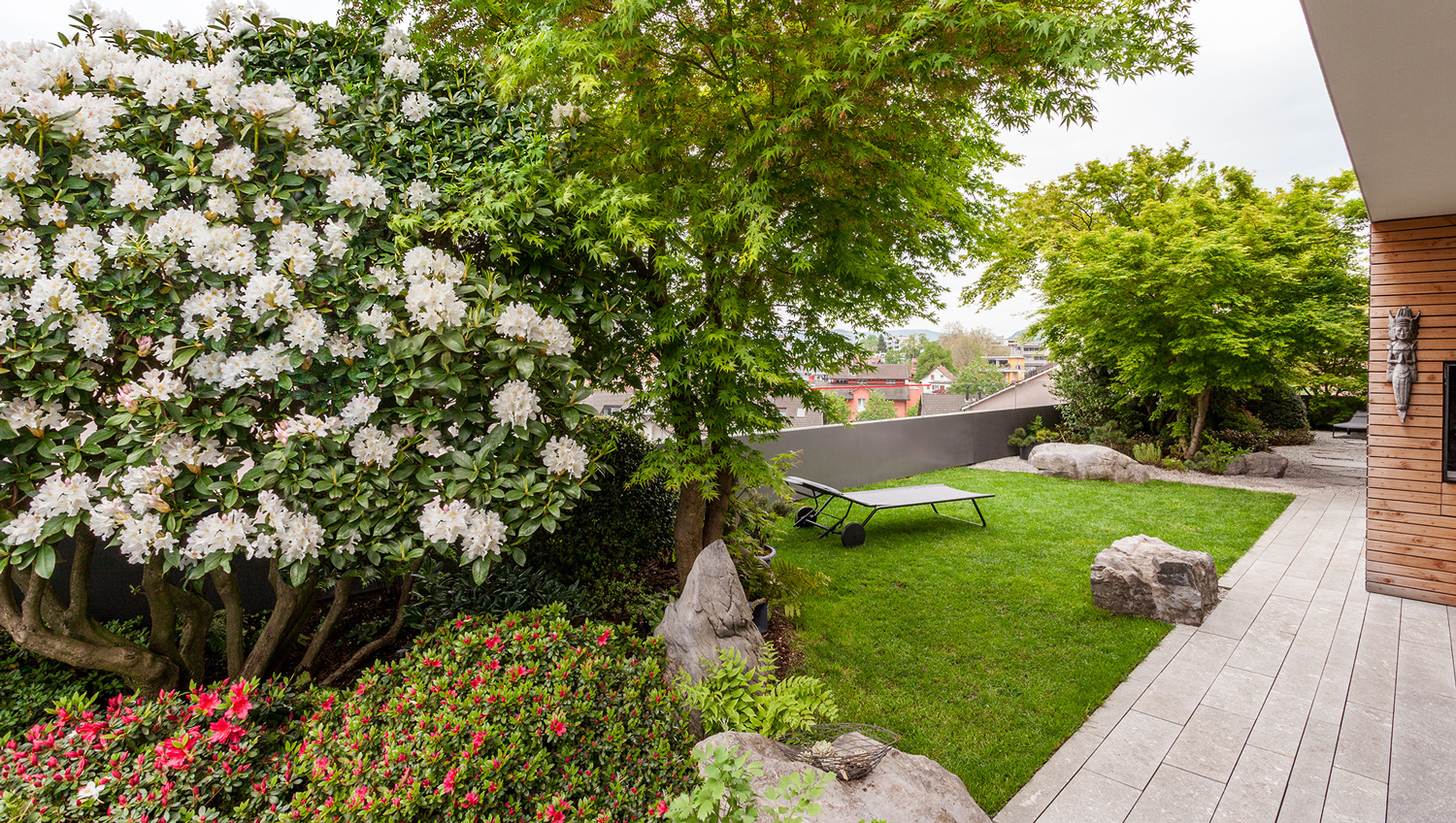
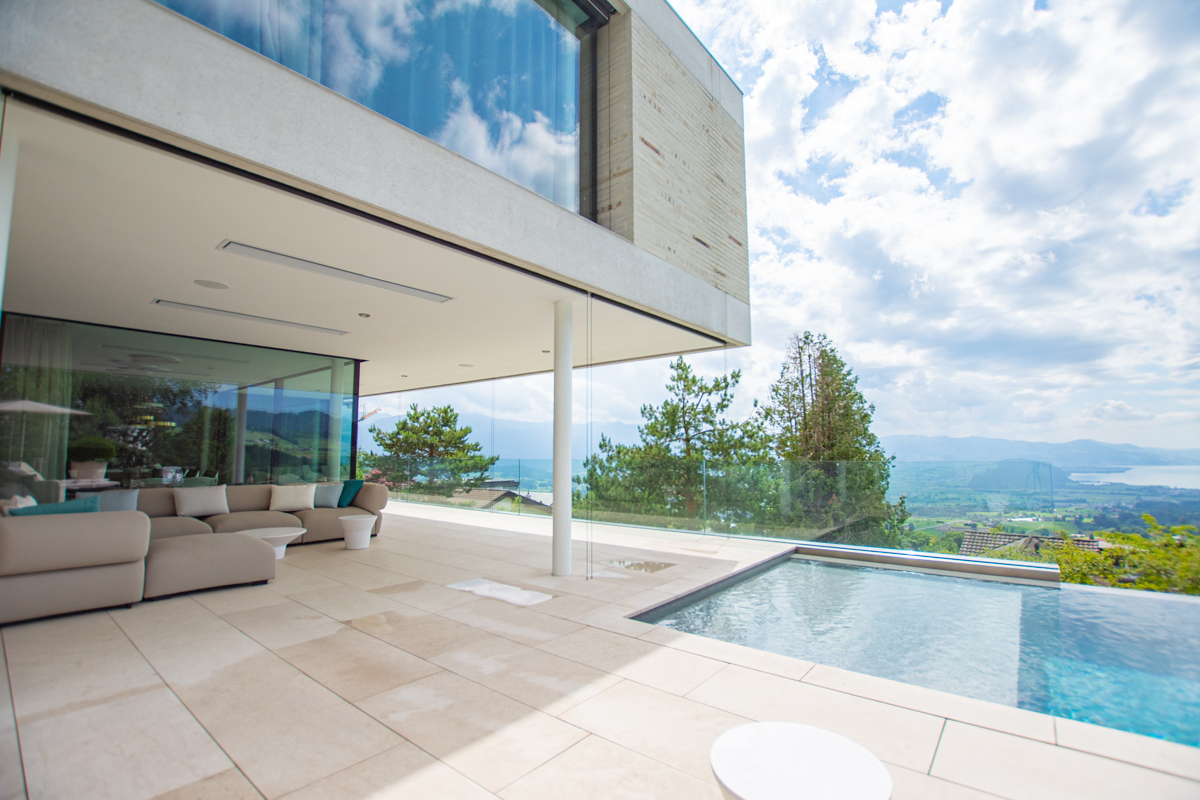
Formal gardens have clear basic shapes. The simple and clearly structured gardens convey a sense of calm and are characterised by a neat and minimalist design. True to the motto „less is more“, clear forms and discreet accents create a clearly organised garden. The outdoor space is fundamentally orientated towards the architecture of the house, which is why the formal garden goes well with a modern building with clear lines.
As a rule, basic geometric shapes divide the garden into square or round areas. Instead of a mix of many different materials, the formal garden emphasises a few elements. Green areas, straight garden paths, an accurately trimmed hedge and individual plants are at the centre of the design of a formal garden.
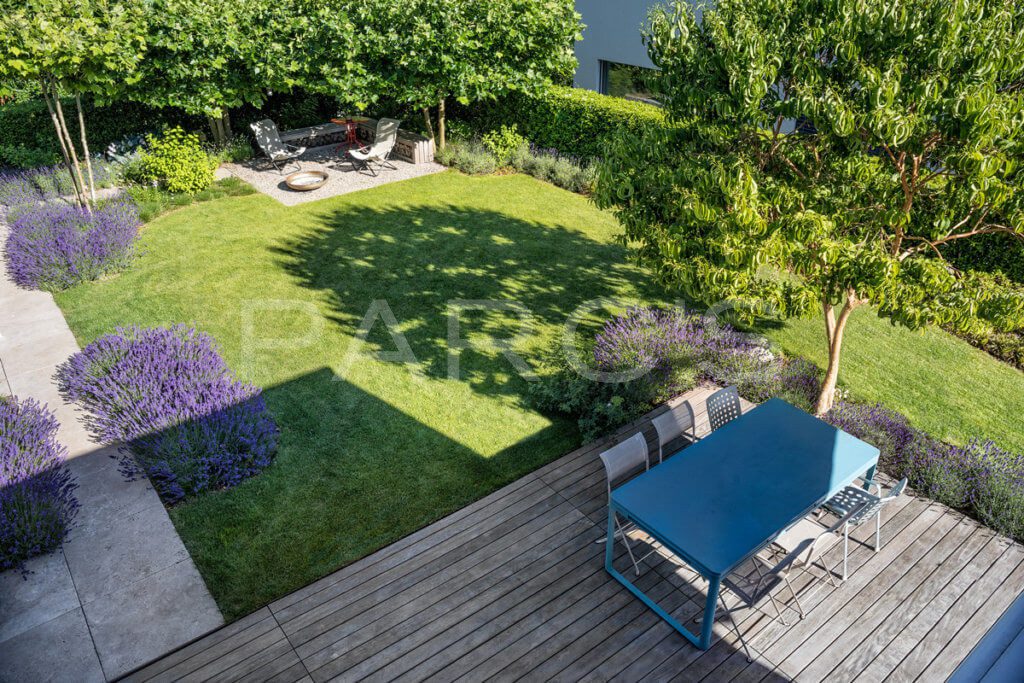
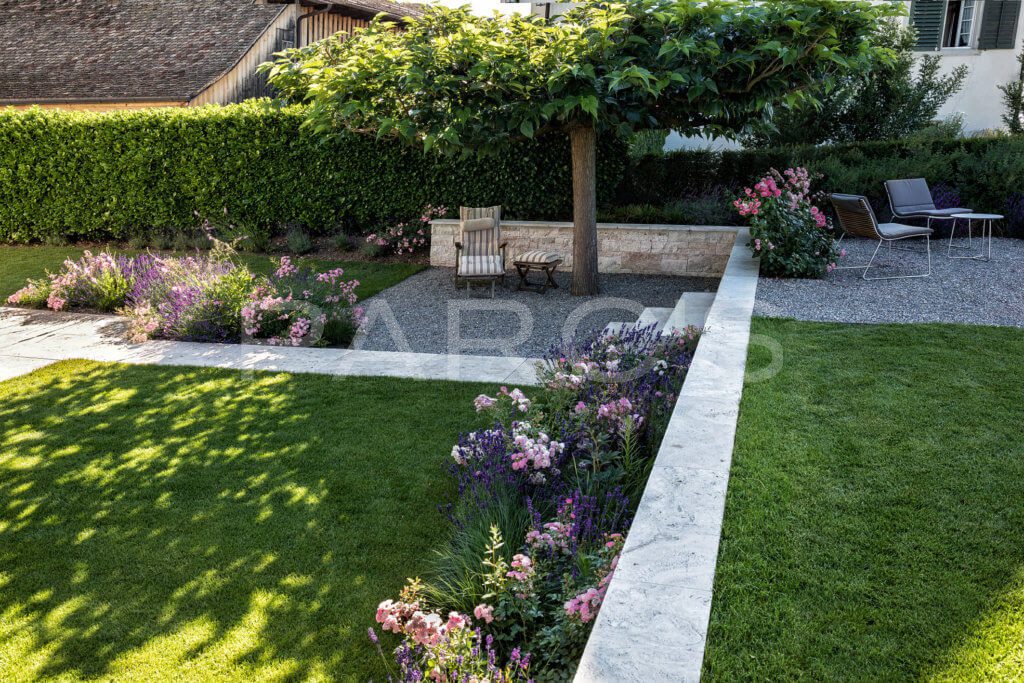
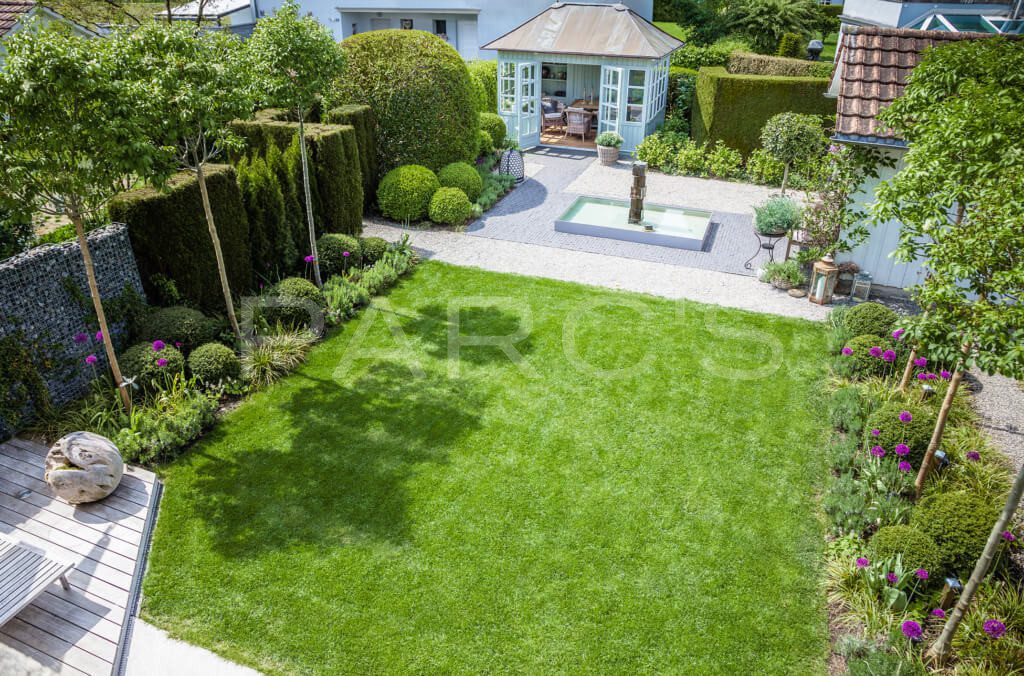
Clear structures with the planting
The type of planting tends to play a secondary role in the formal garden. It adapts to the clear structures of the garden and provides discreet accents here and there. The garden is organised or bordered with precisely trimmed, straight hedges. This gives the garden an uncluttered look. At the same time, evergreen hedges are a natural privacy screen.
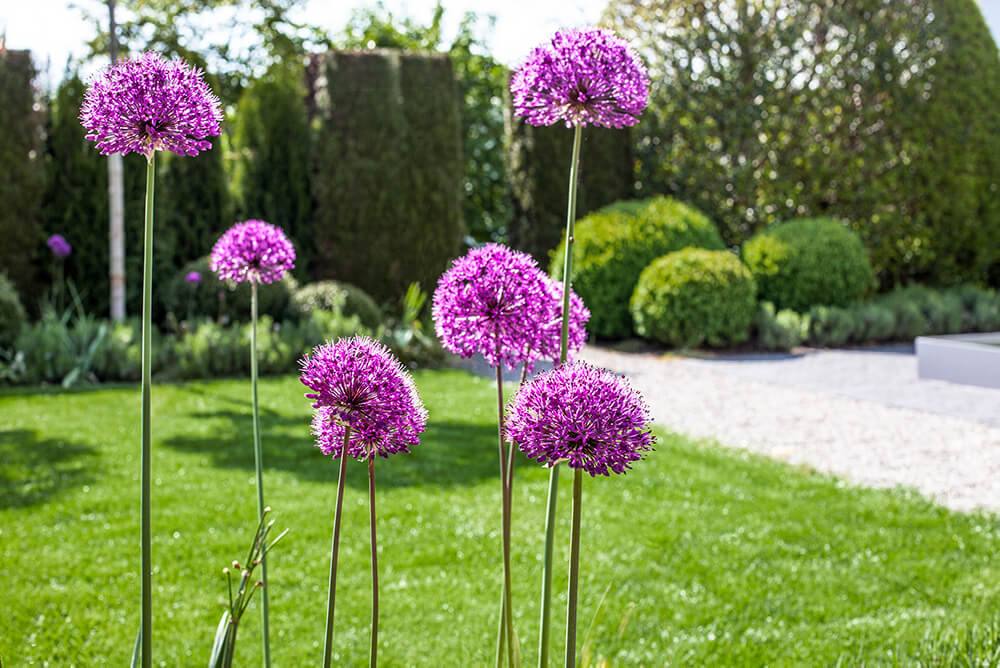
The choice of plants is always based on the architecture of the garden. In a formal garden, plants in geometric shapes are favoured. With pruning-friendly shrubs that are shaped into spheres or squares, the play of shapes in the garden is taken up again. Geometric shapes are also favoured for flowering perennials: The Ornamental leeks with its purple flower spheres, for example, provides beautiful contrasts and yet fits in with the formal garden's interplay of shapes.
These plants are typically found in a formal garden:
- Pruned hedges (yew, beech)
- Hydrangeas
- Lavender
- Roses
Formal garden with a touch of liveliness
As a rule, formal gardens appear very calm, discreet and well-tended. But with individual design elements, the garden becomes lively and playful.
A formal garden can be broken up with grasses and perennials. This makes the garden come alive and the seasons are beautifully recognisable.
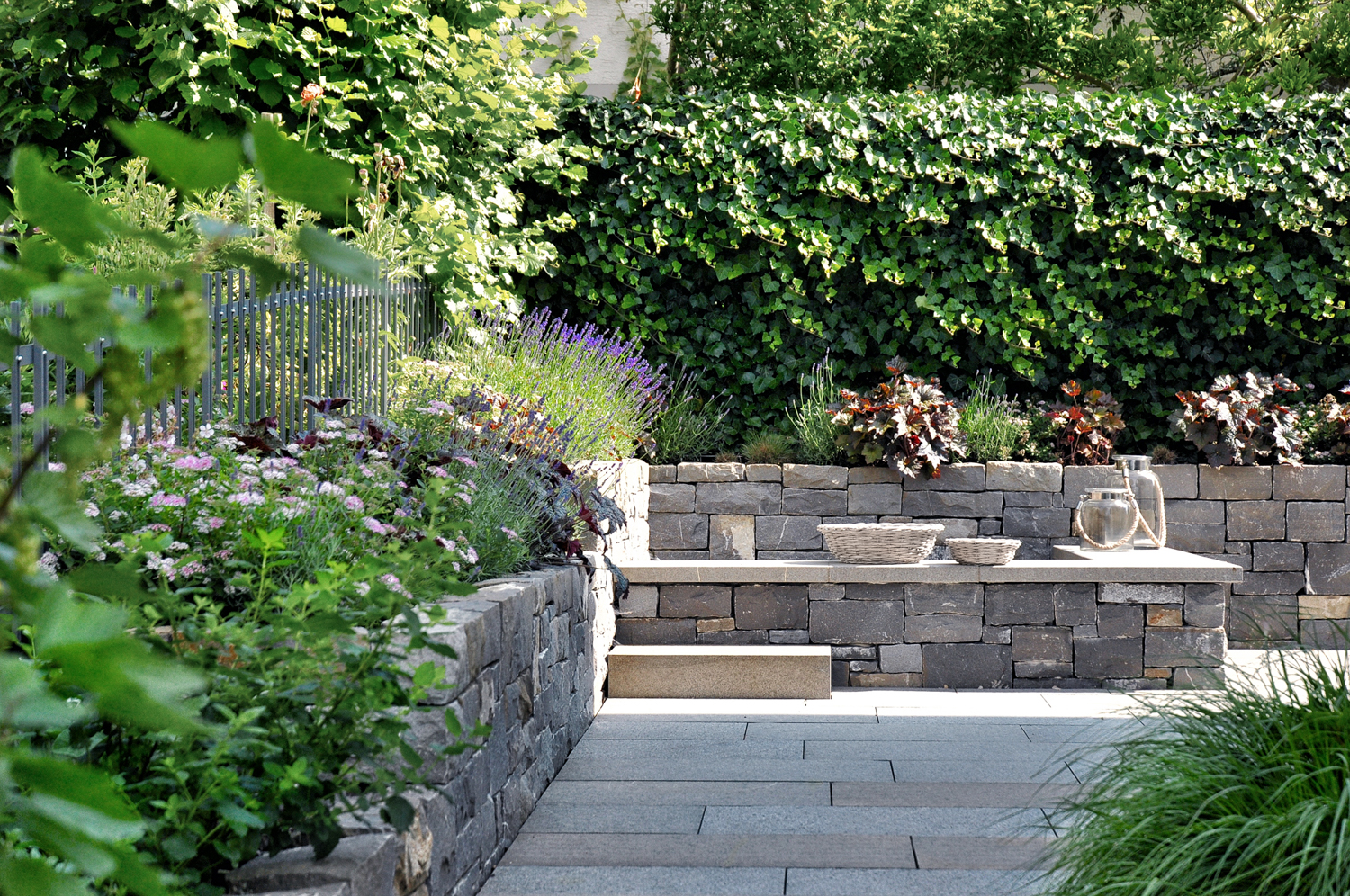
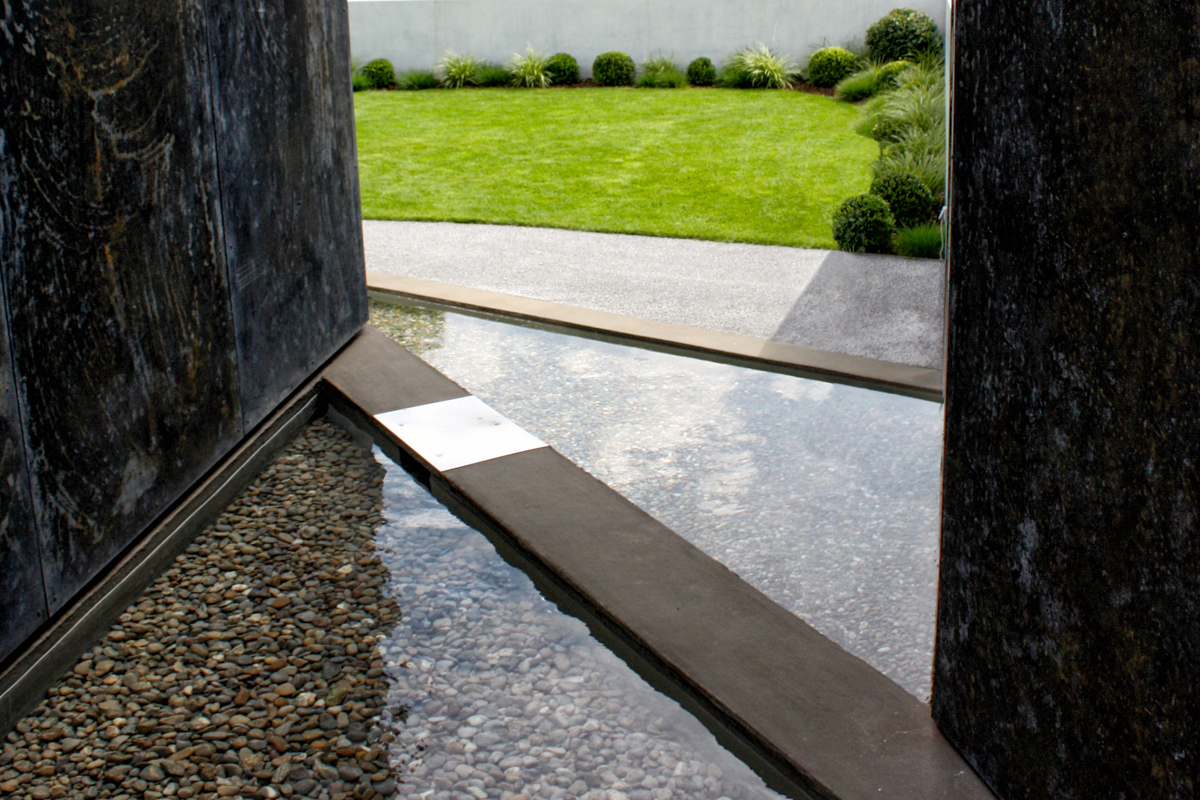
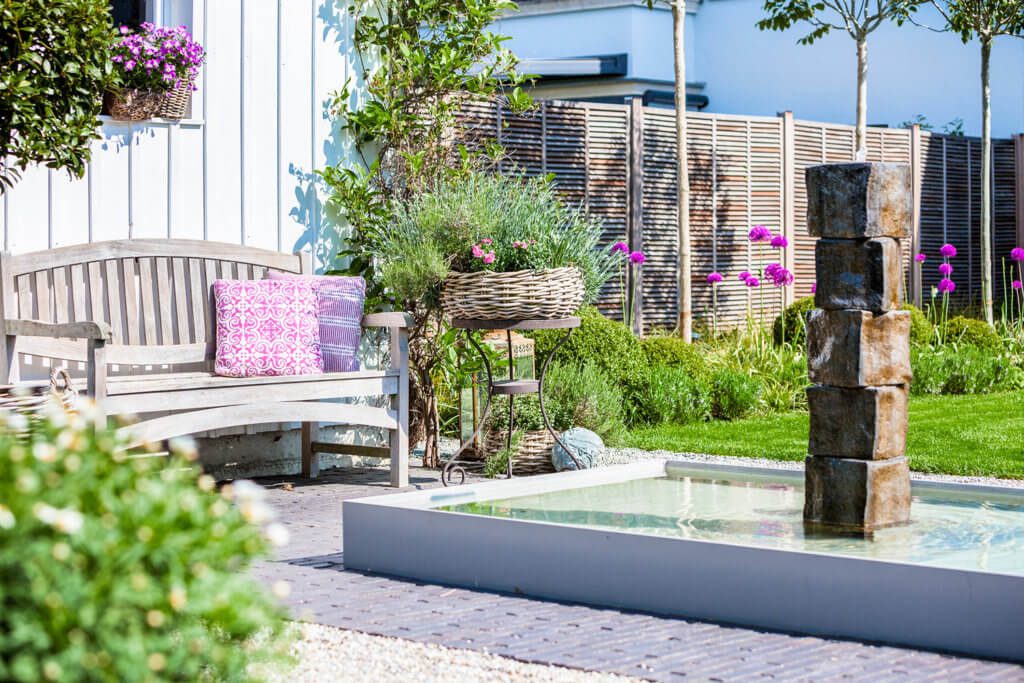
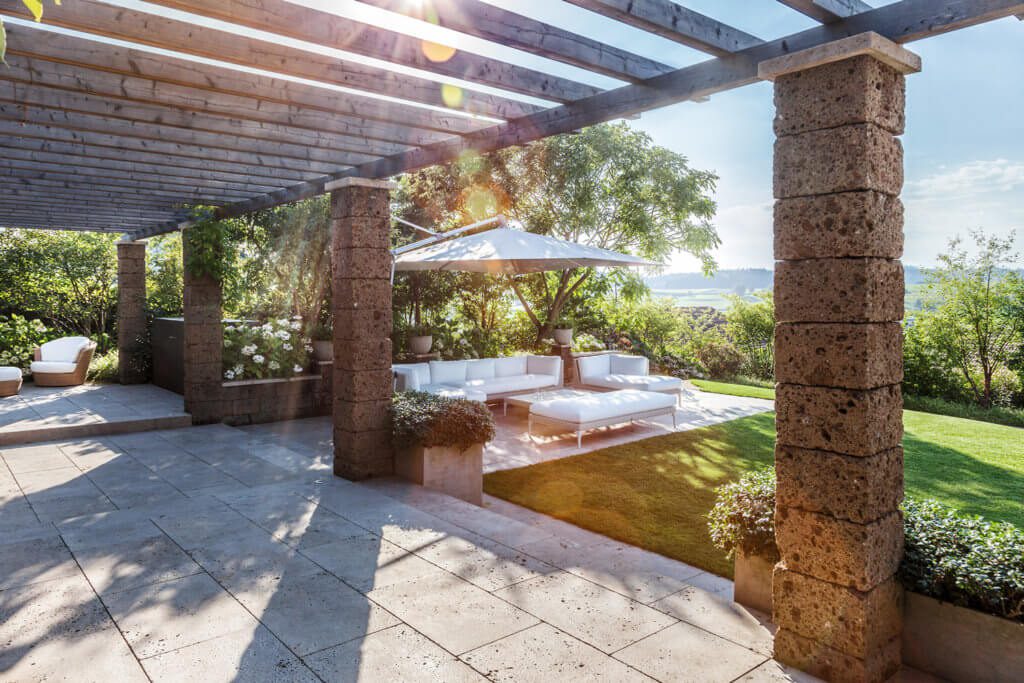
The combination of clipped hedges with airy grasses placed in front of them loosens up the border in a natural way. Colourful flowering shrubs in matching containers also create an eye-catching effect. Shaped, evergreen shrubs add vibrancy and warmth. Other elements such as water features, deliberately placed benches, gazebos or arbours also lend the formal garden a romantic atmosphere. Artistic sculptures are also popular: Cleverly placed, they create visual highlights and emphasise the modern character of the formal garden.
Maintenance of the formal garden
A formal garden certainly requires more maintenance to keep it looking attractive and clean all year round. Ideally, the hedges should be trimmed several times a year to keep them in shape and give the garden the desired structure at all times. A formal garden is also characterised by its neat appearance, which is why weeds and wilted plants should be removed regularly.
To minimise the amount of maintenance required, a conscious effort is made to plant low-maintenance plants. But in today's digital age, there are useful helpers that make gardening easier. An automatic lawn robot that regularly cuts and maintains the lawn is suitable for the lawn. Irrigation systems that supply the plants with the required amount of water fully automatically also take a lot of work off the garden owner's hands.
Our partner GardenTec GmbH is the specialist for technology in the garden. Learn more here more about the possibilities for your garden.
Garden inspiration
Are you also considering remodelling your garden? We will be happy to advise you personally and without obligation. In the meantime, our Reference gardens with timeless design for inspiration.
[contact-form-7 id=“5″ title=“Enquiry form“]